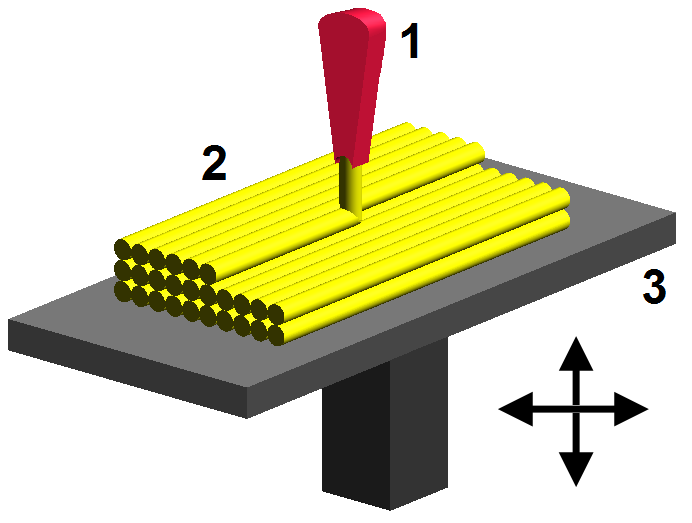
FDM Filament Selection for Singapore's Climate
PLA warps in tropical heat above 55 °C, making PETG and ABS more practical for functional parts stored outdoors. A breakdown of each thermoplastic's behaviour under high humidity.
Read moreA curated reference on FDM filaments, SLS powders, public makerspaces, prototyping bureaus, and how additive manufacturing shapes industries across the island.
Singapore has invested heavily in additive manufacturing infrastructure since 2013, with national bodies coordinating between research institutions, hospitals, and the private sector.
In-depth material on filament selection, community fabrication labs, and medical 3D printing—each piece reviewed by professionals in the field.
PLA warps in tropical heat above 55 °C, making PETG and ABS more practical for functional parts stored outdoors. A breakdown of each thermoplastic's behaviour under high humidity.
Read more
From NLB MakeIT at Libraries to FabLab OMG at the National Design Centre—a location-by-location reference for community fabrication labs across the island.
Read more
SGH's 3D Printing Centre produces patient-specific anatomical models from CT/MRI data. An overview of how additive manufacturing assists pre-operative planning.
Read moreSingapore imports over 90% of its raw materials. Additive manufacturing reduces reliance on traditional supply chains by enabling on-demand part production within the city-state. The National Additive Manufacturing Innovation Cluster (NAMIC), established under the Agency for Science, Technology and Research (A*STAR), coordinates over 320 approved projects bridging universities, hospitals, and SMEs.
NTU's Singapore Centre for 3D Printing (SC3DP) leads research in eight verticals—from aerospace components to 3D-printed concrete for HDB construction pilots. Meanwhile, polytechnics and public libraries offer free access to entry-level FDM machines, creating a two-tier ecosystem that serves both industry and hobbyists.
