Additive Manufacturing in Singapore's Medical Sector: From CT Scans to Surgical Guides
Singapore's public hospitals have integrated 3D printing into clinical workflows over the past decade. The most established facility is the 3D Printing Centre (3DPC) at Singapore General Hospital, which converts medical imaging data—primarily CT and MRI scans—into physical anatomical models, surgical guides, and patient-specific devices.
SGH 3D Printing Centre (3DPC)
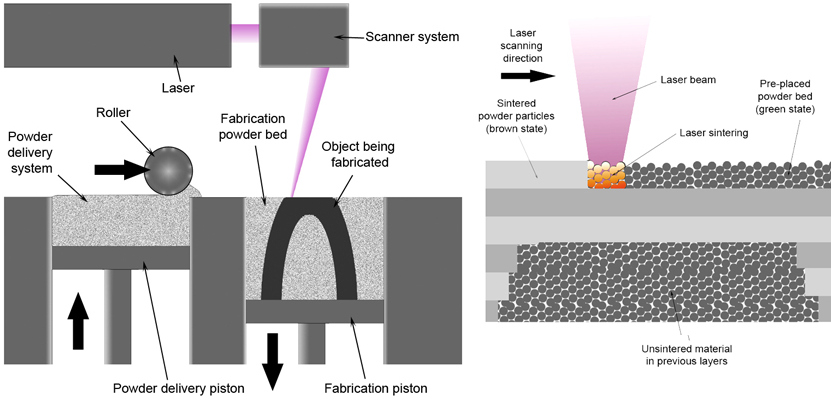
The 3DPC operates within the Department of Orthopaedic Surgery and collaborates with multiple surgical disciplines. A typical workflow begins when a surgeon submits a DICOM dataset (CT or MRI). The 3DPC team segments the imaging data using software such as Materialise Mimics, isolates the relevant anatomy, and produces a 3D-printable STL file. Depending on the clinical requirement, the model is printed in biocompatible resin (SLA), Nylon PA12 (SLS), or metal (SLM for titanium implants).
Common outputs include:
- Pre-operative anatomical models—surgeons rehearse complex procedures on a physical replica of the patient's anatomy, reducing operating theatre time
- Custom surgical cutting guides—3D-printed jigs that clip onto bone surfaces to guide saw blade angles during osteotomies
- Patient-specific titanium implants—designed to match individual bone geometry for mandibular reconstruction, cranial plates, and spinal cages
A.L.I.C.E. @ SGH Campus
The Alice Lee Innovation Centre of Excellence at SGH serves as an incubation hub where medical teams and commercial partners co-develop healthcare technologies. The centre includes a mock-up living lab and dedicated prototyping spaces where 3D printing is used to iterate on medical device designs before formal regulatory submissions.
NTU SC3DP Biomanufacturing Research
NTU's Singapore Centre for 3D Printing (SC3DP) conducts biomanufacturing research including bio-ink development for tissue scaffolding. While clinical bioprinting (printing living tissue) remains experimental, SC3DP has published work on hydroxyapatite-polymer composite scaffolds intended for bone defect repair. Collaboration with hospitals provides the clinical feedback loop necessary for translational research.
Dental Applications
Several private dental clinics in Singapore use desktop SLA printers (Formlabs Form 3B, SprintRay Pro 95) to produce surgical drill guides, clear aligner moulds, and temporary crown restorations. Dental-specific resins (Formlabs Dental LT Clear, SprintRay Die & Model) are biocompatible and Class IIa certified. Turnaround for a single dental guide is typically under 4 hours from intraoral scan to finished product.
Regulatory Landscape
3D-printed medical devices in Singapore fall under the Health Sciences Authority (HSA) regulatory framework. Custom-made devices produced for a named patient by a healthcare institution are exempt from product registration but must follow institutional quality management protocols. Series-produced 3D-printed devices intended for general sale require Class B or higher device registration with HSA, including clinical evidence and biocompatibility testing per ISO 10993.
Material Considerations for Medical Printing
Medical-grade materials must meet stringent cytotoxicity, sensitization, and irritation requirements. Commonly used materials in Singapore hospitals include:
- Formlabs BioMed Clear—USP Class VI, ISO 10993 certified, used for anatomical models
- EOS PA 2200 (PA12)—standard SLS powder for non-implantable surgical guides
- Ti6Al4V (Titanium Grade 5)—for load-bearing metallic implants produced via SLM/EBM
- PEEK (Polyether Ether Ketone)—radiolucent alternative to titanium for cranial implants
Cost and Accessibility
An anatomical model printed in-house at SGH's 3DPC costs between SGD 200–1,500 depending on size and material. By comparison, outsourcing to a commercial medical modelling bureau can cost SGD 3,000–8,000 with longer lead times. The in-house model has allowed SGH to expand 3D printing from a handful of cases per year (2016) to over 300 cases annually.
The integration of point-of-care 3D printing within hospital facilities has measurably reduced the time between imaging and surgical planning in complex orthopaedic and maxillofacial cases.
Disclaimer: This article is informational and does not constitute medical advice. Clinical applications of 3D printing are subject to institutional review and regulatory approval. All data referenced is from publicly available sources as of March 2026.