FDM Filament Selection for Singapore's Tropical Conditions
Fused Deposition Modeling remains the most accessible 3D printing method in Singapore, with entry-level machines available at community makerspaces and commercial bureaus island-wide. However, Singapore's average relative humidity of 84% and ambient temperatures that frequently exceed 32 °C create specific challenges for material storage and finished part durability.
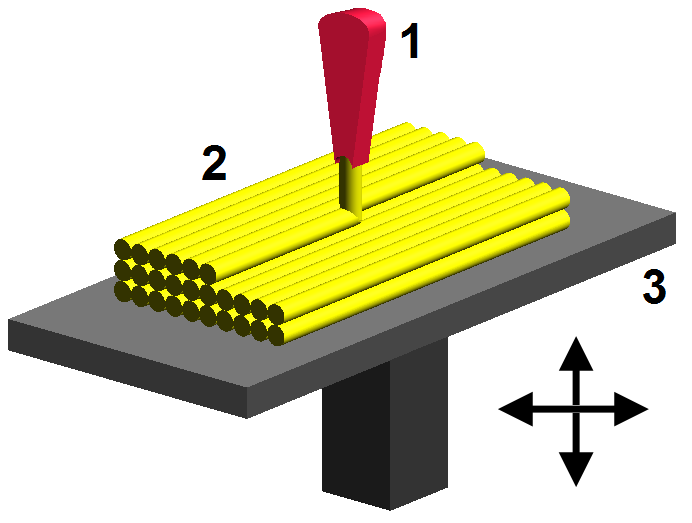
PLA (Polylactic Acid)
PLA is the default filament at most open-access spaces, including NLB's MakeIT at Libraries program. It prints at 190–220 °C, requires no heated bed, and produces minimal odour. The trade-off: PLA's glass transition temperature sits between 55–65 °C. Parts left inside parked cars or on sun-exposed window ledges in Singapore can visibly deform within hours.
For indoor display models, jigs, and prototypes that won't bear sustained loads, PLA is adequate. Local providers like MetaCube3D and ASCAD Solutions stock PLA at approximately SGD 28–38 per kilogram spool.
ABS (Acrylonitrile Butadiene Styrene)
ABS tolerates higher temperatures (glass transition ~105 °C) and offers better impact resistance. It requires a heated bed at 90–110 °C and an enclosed chamber to prevent warping and layer splitting. The material emits styrene fumes during printing, so adequate ventilation or an activated carbon filter is necessary—a concern in Singapore's compact HDB workshops.
ABS is the preferred material for functional housings, automotive clips, and end-use brackets. The Monster Builder quotes same-day turnaround for ABS jobs with post-processing options including acetone vapour smoothing.
PETG (Polyethylene Terephthalate Glycol)
PETG has become the practical middle ground in Singapore's maker community. It prints at 220–250 °C, resists moisture better than PLA, and doesn't emit harmful fumes. Its heat deflection temperature (~80 °C) is sufficient for most indoor functional parts, though it falls short of ABS for sustained outdoor exposure.
PETG is also food-safe in its raw form (though layer lines harbour bacteria, so it's not suitable for reusable food containers without coating). ASCAD Solutions reports PETG as their second-most-requested material after PLA.
Nylon (PA6 / PA12)
Nylon filaments are hygroscopic—they absorb atmospheric moisture aggressively. In Singapore's 84% average humidity, an unsealed spool of Nylon PA6 can become unprintable within 48 hours. Dedicated filament dryers (typically 60–70 °C for 6–12 hours) are mandatory before each print session.
When dry, Nylon produces parts with excellent wear resistance, flexibility, and chemical inertness. Additive3D Asia uses PA12 in their HP Multi Jet Fusion machines for batch production of snap-fit housings and load-bearing connectors.
TPU (Thermoplastic Polyurethane)
TPU is a flexible filament used for gaskets, phone cases, wearable enclosures, and vibration-dampening mounts. It requires a direct-drive extruder (Bowden setups struggle with the material's elasticity). Print speeds should be kept below 25 mm/s for Shore 95A grades.
Specialty and Composite Filaments
Carbon fibre-reinforced PETG and Nylon are available from MetaCube3D and ASCAD Solutions. These composites improve stiffness-to-weight ratios but wear standard brass nozzles quickly—hardened steel or ruby-tipped nozzles are recommended.
Additive3D Asia's industrial line includes over 100 engineering-grade materials: glass-filled Nylon, flame-retardant ABS, ESD-safe compounds, and metal powders (AlSi10Mg, SS316L) for Selective Laser Melting.
Storage Recommendations for Singapore
- Use vacuum-sealed bags with silica gel packets for all hygroscopic filaments (Nylon, TPU, PVA)
- Store filaments in dry cabinets set to 20–25% RH—several local electronics retailers sell these for SGD 80–200
- PLA and PETG tolerate ambient conditions for 2–4 weeks; Nylon should never be left unsealed
- A filament dryer running at 55 °C for 4 hours recovers most moisture-damaged PLA spools
Where to Source Filaments Locally
Major local suppliers include MetaCube3D (Jurong), ASCAD Solutions (online + delivery), and The Monster Builder (Tai Seng). Additive3D Asia handles industrial-grade materials and bulk orders. All four offer same-week delivery within Singapore, and some provide sample packs for material testing before committing to full spools.
Disclaimer: Material properties cited here reflect manufacturer specifications and publicly available datasheets. Actual print results vary depending on machine calibration, slicer settings, and ambient conditions. SG Maker Pulse is not affiliated with any material supplier.